
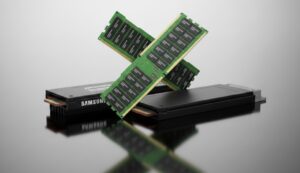
The 2026 Global Memory Shortage: Why RAM and SSD Prices Are Surging
To understand why the “AI boom” is making a standard business laptop or a mid-range smartphone more expensive in 2026, we have to look past the sticker price. We need to look at the wafer. In the semiconductor world, everything—from the high-speed memory in an NVIDIA Blackwell chip to the storage in your phone—starts as a 300mm silicon wafer. In 2026, we are witnessing a “Silicon Zero-Sum Game.” If a manufacturer uses a wafer for AI-grade memory, that wafer cannot be used for your office PC.
Here is a deep dive into the technical hierarchy of memory and storage, and why the AI data center build-out is creating a “butterfly effect” across the entire IT landscape.
1. The DRAM Family Tree: A Shared Foundation
“RAM” is not a single product; it is a family of technologies built on the same production lines. When demand for the “top” of the family tree spikes, the “bottom” starves.
-
DDR5 & DDR4 (Standard Desktop/Server RAM): DDR5 is the current standard for modern servers and PCs.
-
The Squeeze: Because manufacturers are chasing the 70% margins of HBM, they have reduced the production of DDR5. Even DDR4 is seeing price hikes as fabs retire older lines to make room for AI silicon.
-
-
LPDDR (Low Power DDR): Used in smartphones and ultra-thin laptops.
-
The Squeeze: AI is moving “to the edge.” Smartphones now need more LPDDR to run local AI models, putting mobile manufacturers in a bidding war with data centers for the same high-quality silicon.
-
-
GDDR (Graphics DDR): This is the high-speed VRAM on your GPU.
-
The Squeeze: As AI companies gobble up GPUs for training, the supply of GDDR is being diverted to enterprise-grade AI cards, leaving consumer gaming and workstation card prices volatile.
-
-
HBM (High Bandwidth Memory): The “Crown Jewel.” This is 3D-stacked DRAM used exclusively in AI accelerators.
-
The AI Impact: HBM is incredibly “wafer-hungry.” Producing 1GB of HBM requires roughly three times the wafer area of 1GB of standard DDR5 (Source: Micron/SK Hynix). Furthermore, HBM requires complex Through-Silicon Via (TSV) stacking, a process that significantly increases manufacturing time and reduces overall yield compared to standard RAM.
-
2. The NAND & SSD Hierarchy: From Raw Silicon to Enterprise Arrays
To understand the market, you must understand the relationship between the medium, the protocol, and the final product.
-
NAND Flash (The Ingredient): The actual silicon chip that stores data. Think of NAND as the raw “flour” used to bake different types of storage.
-
SSD (The Finished Product): A complete device consisting of NAND chips, a controller, and an interface.
-
NVMe & PCIe (The High-Speed Highway): PCIe is the physical connection, and NVMe is the high-performance language designed specifically for flash memory.
The “Layers” of NAND: Speed vs. Density
Manufacturers vary the bits per cell, creating a trade-off between cost and lifespan:
-
SLC (Single Level Cell): Fastest/most durable; used in industrial applications.
-
TLC (Triple Level Cell): The “sweet spot” for performance and reliability. Standard for Enterprise NVMe SSDs.
-
QLC (Quad Level Cell): High capacity, lower price, but lower endurance. Found in budget consumer laptops.
The AI Displacement Effect
AI data centers don’t just need to “process” data; they need to “store” petabytes of it for training.
-
Enterprise SSD Surge: Large language models require massive “read” speeds. Data centers are currently buying up all available TLC NAND capacity to build high-density Enterprise SSDs.
-
The “Trickle-Down” Shortage: When enterprise buyers (Amazon, Microsoft, Google) lock in NAND supply for 2026, manufacturers stop producing the “Client” SSDs found in standard business laptops. This forces PC manufacturers to either pay a premium for TLC or downgrade to slower QLC drives to keep costs down. (Source: TrendForce 2026 NAND Analysis).
Understanding these hierarchies is essential. For example, AI servers use DDR5 system RAM, HBM on GPUs, and enterprise NVMe SSDs, all simultaneously. Consumer PCs or smartphones mostly use DDR4/DDR5, LPDDR, or GDDR, and SATA or NVMe SSDs. Yet all compete for the same global semiconductor fabrication capacity, especially in NAND Flash and DRAM.
3. The Structural Squeeze: Why AI Hyperscalers Dictate Global Pricing
The 2026 hardware market is defined by a “Resource Cannibalization” effect. Because AI data centers operate on massive profit margins, they have become the “Price Maker” for the entire semiconductor industry, leaving smartphones, PCs, and consumer electronics as “Price Takers” competing for the leftovers.
The LPDDR Crisis: Smartphones vs. Servers
Historically, LPDDR (Low Power DDR) was the exclusive domain of mobile devices. However, the architecture of new AI superchips—such as the NVIDIA Grace-Blackwell series—has shifted to using LPDDR5X for its high efficiency and bandwidth. (Source: NVIDIA GB10 Specs).
-
The Double Whammy: Smartphone manufacturers are now in a direct bidding war with trillion-dollar hyperscalers (Amazon, Meta, Google) for the same LPDDR5X silicon.
-
The Result: Analysts report that memory now accounts for over 20-25% of the total Bill of Materials (BOM) for a flagship smartphone, up from just 10% in 2024. This is forcing manufacturers to either hike prices by $150–$200 or “down-spec” mid-range devices back to 8GB of RAM.
Wafer Displacement and the “HBM Tax”
The most significant technical bottleneck is the physical footprint of High Bandwidth Memory (HBM). Producing 1GB of HBM requires approximately three times the wafer area of standard DDR5.
-
Capacity Siphon: When a foundry like TSMC or Samsung allocates a wafer to HBM for an AI cluster, they are effectively deleting the potential for three wafers worth of standard PC or laptop RAM.
-
The Pricing Floor: This displacement creates a permanent “pricing floor.” Manufacturers will not produce low-margin DDR4 or DDR5 if they can use that same silicon for high-margin AI components. Consequently, even “legacy” components are seeing 1Q26 price spikes of 90-100% QoQ, regardless of actual consumer demand. (Source: Techzine/TrendForce Revised Forecast).
The “Spec Freezing” Phenomenon
For the first time in a decade, we are seeing a reversal in the “more for less” trend of technology.
- In PCs: To keep entry-level enterprise laptops under budget, OEMs are sticking with 8GB or 16GB configurations rather than moving to the 32GB standard that modern Windows environments require.
- In Smartphones: Budget models are being “re-tiered,” moving from LPDDR5 back to older, more available LPDDR4X nodes simply to maintain a sub-$400 price point.
4. The 2026 Strategic Playbook: Navigating the Memory Super-Cycle
The market data for early 2026 is unprecedented. With contract prices for DRAM and NAND Flash projected to see record-breaking quarter-over-quarter surges—some as high as 90% for standard DDR5—the traditional rules of IT procurement have been rewritten. We are no longer in a cycle of “planned obsolescence,” but rather a period of strategic asset retention and high-value liquidation.
Why “Waiting it Out” is No Longer a Strategy
In previous market cycles, IT directors could wait for supply gluts to drive prices down. However, the AI-driven shortage is structural, not cyclical. With giants like Micron recently exiting certain consumer segments to prioritize high-margin AI silicon, the “trickle-down” of affordable components to the enterprise and consumer markets has effectively stopped. For businesses, this creates two critical imperatives:
-
Audit Your “Dark” Inventory: ardware that was pulled from production six months ago is likely worth more today than the day it was decommissioned. Because new Enterprise NVMe SSDs are seeing lead times extend into late 2026, the secondary market for “last-gen” but high-end storage is booming.
-
Capitalize on “Spec-Freezing”: As new PC and server prices skyrocket, many organizations are opting to extend the life of their current fleets. This has created a massive demand spike for upgrade components. If you have surplus modules, you are sitting on a liquid asset that is currently outperforming many traditional investments.
Turning Hardware Scarcity into Capital
The relationship between AI data centers and your office technology is clear: they are competing for the same limited pool of silicon wafers. As a result, your used hardware has decoupled from standard depreciation curves. At BuySellRam.com, we specialize in helping businesses navigate these volatility peaks. Whether you are looking to sell memory from a decommissioned server farm or sell SSD hard drives inventory to fund your next-generation refresh, the timing has never been more favorable.
The Bottom Line:
Even if your organization isn’t building a Large Language Model, the AI revolution is directly impacting your balance sheet. By understanding the “Silicon Zero-Sum Game,” you can transform a procurement crisis into a recovery win.
Maximize Your IT Asset Recovery
In a market where component prices are hitting record highs, leaving surplus hardware in a storage closet is a lost revenue opportunity.
Would you like me to provide a current market valuation for your excess DDR4, DDR5, or Enterprise NVMe inventory? Let BuySellRam.com help you capture the peak of this 2026 super-cycle.