
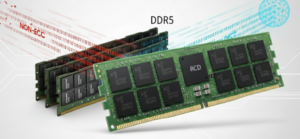
What Actually Drives Server Memory Resale Value: DDR4 vs DDR5
For most of the last two decades, the secondary server memory market followed a predictable curve. A new generation launches, the prior generation slides down a gentle depreciation slope, and a few years later the last sticks clear at scrap pricing. DDR3 followed that script. So did DDR2.
DDR4 did not.
Between September and November of 2025, mainstream DDR4 chip spot prices climbed roughly 158%, while DDR5 spot prices surged 307% over the same window as memory makers diverted wafer capacity toward HBM for AI accelerators. The squeeze was sharp enough that Team Group publicly warned of DRAM prices doubling in a single month, and Samsung lifted contract pricing 30–60% over September levels in Q4 2025. By year-end, DDR4 was — in several high-density SKUs — more expensive per gigabyte on the spot market than DDR5, a price inversion few in the memory channel had pencilled into their plan.
Six months later, the rally has stabilized rather than reversed. The mainstream DDR4 1Gx8 3200MT/s chip traded at roughly $32.40 on the spot market the week of May 5, 2026 — down only 0.25% week-over-week, but up from roughly $21.75 in late December 2025. On the contract side, Q1 2026 server DRAM contracts landed at the high end of the 60–70% quarter-over-quarter increase the DRAM majors had pushed for, with another 55–60% expected through Q2. DDR5 demand, meanwhile, continues to absorb every available high-density module the channel produces.
This piece lays out the factors that actually drive secondary-market value for server memory, how the late-2025 squeeze reshaped the market, where the intake-dock view sits as of mid-2026, and what to watch through the rest of 2026 and into 2027. A note on terminology before going further: spot pricing, contract pricing, and secondary-market wholesale pricing are three different markets that move on different timelines. Spot is a leading indicator, contract sets the floor for new-module economics, and the secondary market lags both — usually by a quarter or two. They’re treated separately throughout.
The framework: seven variables that drive a memory module’s resale value
Resale value isn’t a single number on a chip. It’s the output of about seven variables that wholesale buyers — ITADs, brokers, refurbishers — weight every time a lot crosses the dock.
1. Capacity per module. Per gigabyte, mid- and high-density modules clear at a meaningful premium to low-density. 32GB and 64GB DDR4 RDIMMs are the workhorse SKUs in 13G/14G/15G server fleets; 64GB and 128GB DDR5 RDIMMs play the same role in current-gen Intel and AMD platforms. Smaller sticks (8GB, 16GB) face thinner demand because they don’t help anyone hit a target system-RAM number without filling every channel.
2. Form factor and class. Registered (RDIMM), Load-Reduced (LRDIMM), and the newer Multiplexed Rank (MRDIMM) variants serve different platforms and pull different bids. Server-class RDIMM/LRDIMM commands the strongest secondary market — desktop UDIMM is a different and weaker market entirely.
3. ECC vs non-ECC. ECC server memory is, in almost every market condition, the highest-value class of used RAM. It clears into a global base of enterprises, hyperscalers, and HPC operators that won’t accept non-ECC alternatives.
4. Speed bin. A DDR4-3200 32GB 2Rx4 RDIMM pulls a different bid than a DDR4-2666 stick of the same capacity, because the faster bin slots into a wider population of CPUs and validated configurations. The same is true for DDR5: 5600 and 6400 bins are pulling better than 4800.
5. Brand and module assembler. Samsung, SK Hynix, and Micron — the three remaining DRAM majors — carry a brand premium on the secondary market because they are the brands enterprise procurement teams will accept without an argument. Kingston, Crucial (Micron-owned), and Smart Modular carry strong secondary bids on assembled modules. Tier-2 module houses and white-label sticks discount meaningfully even when the underlying DRAM is identical.
6. Generation overlap with active server platforms. This is the single biggest macro variable. DDR4 retained value because Intel Cascade Lake / Ice Lake and AMD Rome / Milan servers still run a large share of production fleets — every deployed socket is a potential buyer. The minute a generation has no active production platform, resale value collapses. DDR3 ECC RDIMM is the cautionary example.
7. Lot size, condition, and pull source. Twenty matched sticks from a single Dell PowerEdge pull stronger than twenty mixed-bin sticks from five different boxes. Documented pull source (working system vs. salvage) and physical condition (no bent pins, intact labels, original heatspreaders) move bids by 10–25%.
A useful mental model: the first three variables determine whether a module has a wholesale market at all; the next four determine what price it clears at inside that market.
How the late-2025 squeeze reshaped the market
The reason DDR4 didn’t slide down the usual depreciation curve comes down to three forces converging in 2025.
First, the DRAM majors began phasing commodity DDR4 capacity out to free wafer area for higher-margin DDR5 and HBM. Samsung initially planned to stop taking DDR4 orders by mid-2025, and Micron issued DDR4 EOL notices to customers in June 2025. The picture has since become more nuanced: Samsung and SK Hynix extended DDR4 production into 2026 to capture the inverted-margin opportunity, and Micron has repositioned rather than fully exited — its May 2026 announcement launched 1α DDR4 production at Manassas, Virginia for long-lifecycle applications in automotive, defense and aerospace, industrial, networking, and medical, with the $2 billion expansion set to quadruple Manassas DDR4 wafer supply by end of 2026. The net effect is that commodity server DDR4 capacity is shrinking, while specialty long-lifecycle DDR4 supply is growing on a separate track.
Second, demand didn’t cooperate. A large installed base of Cascade Lake, Ice Lake, Rome, and Milan servers — many of them three to six years into a typical seven-to-ten-year operating life — still needed DDR4 for capacity expansions, repairs, and warranty stock. Industrial, embedded, telco, and storage customers added another layer of structural demand that won’t migrate to DDR5 on the hyperscaler timeline.
Third, HBM. High Bandwidth Memory for AI accelerators consumes roughly two to three times the wafer area per gigabit of standard DRAM, and the DRAM majors have pushed it to the top of the production priority stack. SK Hynix has told investors its advanced-packaging lines are sold out through 2026. Every wafer reallocated to HBM is wafer capacity removed from the DDR4/DDR5 pool.
What the intake dock looks like in mid-2026
Specific buy-side dollar quotes aren’t useful to publish — they move weekly, vary by lot, and lag both spot and contract markets. What is useful is a directional read on how much of original MSRP a clean, tested, server-grade module is retaining on the secondary wholesale market right now, and where each SKU class is trending.
| SKU class | Value retention vs. original MSRP, mid-2026 | Direction late 2025 → mid-2026 | Likely path into 2027 |
|---|---|---|---|
| DDR4 RDIMM, 32GB / 64GB, 3200 (server pulls) | High band | Up sharply, now stabilizing at elevated levels | Elevated through 2026; gradual easing as refresh supply lands |
| DDR4 RDIMM, 16GB, 2400 / 2666 | Mid band | Up modestly | Soft; demand confined to repair / warranty pools |
| DDR4 UDIMM / SODIMM (non-ECC) | Low-to-mid band | Up, but less than ECC server | Tracks consumer market; structurally softer |
| DDR5 RDIMM, 32GB, 4800 / 5600 | Mid-to-high band | Up | Stable; displaced on new builds by 64/128GB |
| DDR5 RDIMM, 64GB, 5600 / 6400 | High band | Up strongly | Tight through 2026; first refresh supply lands late 2026 |
| DDR5 RDIMM, 128GB+, 5600 / 6400 | High band | Up strongly | Scarce; AI / cloud absorbs nearly all supply |
| DDR3 ECC RDIMM | Salvage band | Flat to declining | Continues to drift toward scrap economics |
Across the lots that have crossed the intake desk over the last two quarters, the SKU mix has tilted noticeably toward DDR4 RDIMM as Cascade Lake / Ice Lake and Rome / Milan fleets begin their first real refresh wave; DDR5 supply on the wholesale side remains thin and concentrated in smaller lots, and bid spreads on 64GB and 128GB DDR5 RDIMMs have stayed narrow as multiple buyers step in on every matched lot. That pattern is directionally consistent with what TrendForce and Counterpoint are publishing on the new-market side, where Citi’s May note projects DDR5 64GB RDIMM unit pricing climbing from roughly $873 in Q1 2026 toward $1,586 by Q4 — close to a 2x move in nine months. Those new-market and contract data points anchor where secondary value is heading, with the usual lag.
A note on inventory friction
One pattern worth flagging for IT asset managers planning a decommission: memory modules are unusually sensitive to time-on-shelf compared to chassis, drives, or switches. Spot and contract prices move materially over a quarter, lot composition degrades as matched sets get separated for testing, and any modules still carrying internal asset tags or customer-specific labels need documented chain-of-custody handling to satisfy modern data-handling and audit requirements. The combination means the recovery curve on memory tends to bend faster than most IT teams expect when modules sit in storage. Disposition timing matters here in a way it doesn’t for most other rack-level assets.
Where this goes next: 2026 H2 and 2027
Three things to watch.
Commodity DDR4 supply continues to tighten in stages. Samsung and SK Hynix are running their extended DDR4 production through 2026, but the direction is set toward wind-down on the commodity side, while Micron’s Manassas line will add long-lifecycle DDR4 on a separate timeline aimed at automotive, defense, and industrial customers — not at the server channel. The combined effect for enterprise server DDR4 is steady supply attrition against an installed base that depreciates slowly. Expect DDR4 secondary-market values to remain elevated through 2026 and most of 2027, with the eventual unwind driven by installed-base attrition rather than new supply. Operators with DDR4 server memory headed for decommission are operating in an unusually favorable resale window — but it’s a window, not a permanent state.
DDR5 stays tight, and the platform math keeps reinforcing demand. Intel’s 4th and 5th Generation Xeon Scalable (Sapphire Rapids, Emerald Rapids) and the Granite Rapids generation, alongside AMD’s EPYC Genoa / Bergamo / Turin, are DDR5-only and have moved to 12 memory channels per socket — effectively mandating DDR5 on any new server build and increasing the stick count per box. Next-gen platforms (Intel Diamond Rapids, AMD Venice) point toward a 16-channel step. SK Hynix has publicly stated it expects the memory shortage to persist through late 2027, with meaningful relief unlikely before new fab capacity comes online in 2027–2028. For organizations sourcing or selling DDR5 server memory in volume, that scarcity is the defining condition of the market through at least year-end 2026.
Secondary DDR5 supply starts to materialize. The first wave of Sapphire Rapids and Genoa servers deployed during the 2023–2024 hyperscaler expansion will hit their first refresh windows starting late 2026. That’s when the ITAD channel will begin to see consistent DDR5 volume on intake — and where pricing dynamics will start to normalize. Until then, DDR5 secondary supply is thin, lots are small, and bids run hot.
The wildcard for both generations is HBM demand. If AI infrastructure capex flattens or contracts in 2026–2027, wafer capacity flows back to DDR4 and DDR5 and the entire pricing structure resets. None of the published 2026 capex guides from the DRAM majors assume that outcome, but it’s the risk worth tracking.
Practical takeaways
For asset managers preparing a DDR4 decommission lot, the resale window is unusually favorable but time-sensitive: pull and remarket sooner rather than later, document pull source and lot composition, and keep matched sets matched. For organizations sourcing DDR5 against the current shortage, certified pre-owned and decommissioned-fleet supply is a legitimate cost lever, though selection is still thin. And for anyone evaluating offers on either generation, the seven variables in the framework above are the ones that should drive the conversation — not a single dollar number printed in a blog post or quoted out of a stale price feed.
The secondary memory market in 2026 is, more than anything, a market shaped by the AI infrastructure buildout one step removed: HBM diversion squeezed DDR4 and DDR5 supply, the squeeze inverted decades of expected depreciation, and the unwind — at least on the commodity side — will take longer than the squeeze did to build. For readers tracking how the upstream contract and spot markets continue to move, the DRAM & HBM market trend monitor is updated as new prints land.