
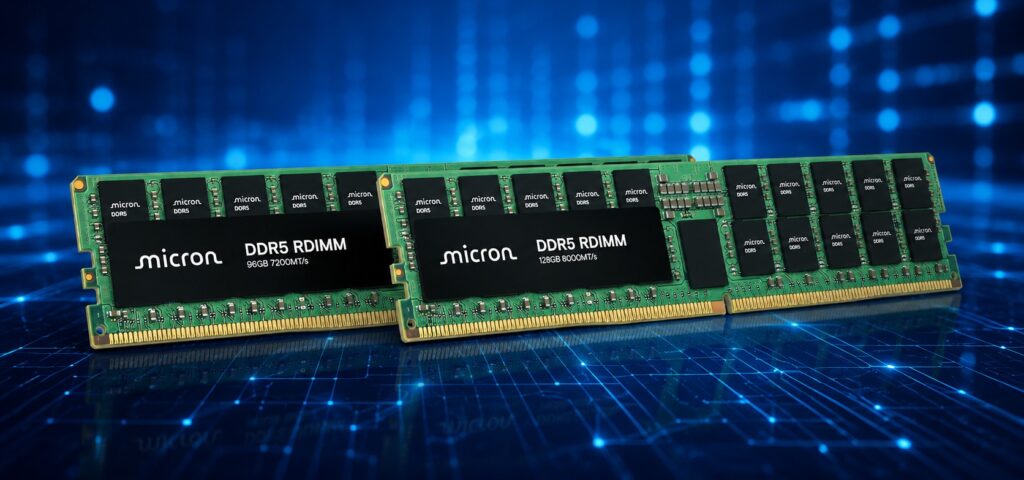
Server DRAM prices are still climbing. TrendForce expects contract prices for server memory to rise another 13%–18% quarter over quarter in Q3 2026, while supply conditions remain tight enough that the firm anticipates a server DRAM shortage extending into 2027.
The headline number does not describe every buyer equally. Several large U.S. cloud providers have secured multi-year supply agreements that restrict further price increases, while customers without comparable agreements — and purchases beyond already-contracted volumes — are expected to absorb more of the next round of pricing pressure.
For businesses, data centers and IT teams, that makes the DRAM market more complicated than a simple industry price index. Supply remains constrained, but contract coverage, purchasing scale and configuration flexibility increasingly influence the price an individual organization actually experiences.
One DRAM market, different levels of price exposure
Memory has always been cyclical. Strong demand tightens supply, manufacturers raise prices, production eventually catches up, inventories rebuild and prices weaken.
That cycle still exists. What has changed in the current phase is how some of the largest customers are managing their exposure before supply catches up.
TrendForce reports that several U.S. cloud service providers have signed multi-year agreements that restrict suppliers’ ability to raise prices for those customers. From Q3 2026, it expects additional server DRAM increases to come primarily from customers without such agreements and from incremental purchases outside contracted volumes.
The result resembles a two-tier pricing dynamic, although it would be too strong to describe server DRAM as two formally separate markets. Contracted demand has greater supply and pricing protection, while buyers purchasing closer to the marginal market remain more exposed to shortages and new quotations.
An industry forecast of 13–18% therefore cannot be applied mechanically to every infrastructure budget. Two organizations can operate in the same DRAM market and face materially different procurement economics.
Long-term contracts are becoming a form of supply insurance
Micron’s recent customer agreements show how substantial these arrangements can become.
In its Q3 FY2026 Form 10-Q, Micron describes multi-year take-or-pay agreements, under which customers make binding commitments to purchase specified volumes. Most use either fixed pricing or minimum-and-maximum price bands. Micron says its largest agreements generally include a ceiling for existing products near Q2 2026 market prices and a price floor through the contract term.
For buyers, the attraction is greater certainty around both supply and cost. For the supplier, binding volume commitments improve visibility into future demand.
SK hynix is moving in the same broad direction, although its contracts should not be assumed to use Micron’s exact terms. The company said in July that it had finalized long-term agreements with around ten key customers and was continuing discussions with other major clients as AI infrastructure investment drives memory demand.
Long-term contracts are therefore becoming part of the infrastructure strategy of major buyers, not merely a purchasing convenience. Securing future memory capacity can be valuable even when the contractual price later turns out to be higher than the market bottom.
AI demand is keeping the supply response slow
The contracts matter because the underlying physical supply remains constrained.
Samsung said in its Q2 2026 results that demand growth for server DRAM, enterprise SSDs and high-bandwidth memory (HBM) is expected to accelerate in the second half of the year, while supply constraints continue despite efforts to expand production.
AI infrastructure affects more than the HBM installed alongside accelerators. AI and general-purpose server fleets also consume conventional server memory, while HBM itself competes for significant manufacturing resources. BuySellRam.com examined that broader relationship in AI Is Repricing Memory, Storage, and CPUs — Not Just GPUs.
Production cannot adjust on the same timetable as demand. Memory manufacturers can increase output at existing semiconductor fabrication plants and move production toward newer manufacturing processes, but major new facilities take years to build, equip and ramp. TrendForce says substantial output from major new projects is not expected to materialize until 2028.
A data-center expansion can change within a quarter. Semiconductor manufacturing capacity cannot.
Expensive DRAM is changing what some buyers deploy
The clearest operator-level signal may be appearing in server configurations.
Cloud providers and server manufacturers have gradually adjusted registered DIMM (RDIMM) configurations since the first half of 2026. In some systems, buyers have shifted from 96GB and 128GB modules toward 32GB and 64GB modules while balancing procurement costs against CPU availability.
This is a limited observation, not evidence that the broader server market is abandoning high-density memory. Systems that need very large memory footprints still benefit from higher-capacity RDIMMs, especially when available DIMM slots become the limiting factor.
The shift is useful because it shows how buyers adapt when memory becomes expensive. Procurement is no longer only a question of accepting or rejecting a quoted price. Some operators can change module density, populate more slots, delay expansion or alter the configuration around other constrained components.
That same logic matters across the hardware lifecycle. A lower-density server module does not automatically lose practical value simply because denser parts exist. Its usefulness depends on the platforms that still support it, the capacity those systems require and the cost of available alternatives.
For organizations removing server memory during a refresh, that is a reason to evaluate actual part numbers rather than treating density or age as a sufficient proxy for residual value. The analysis of DDR4 and DDR5 server-memory resale value covers those module-level factors in more detail, while organizations already decommissioning enterprise memory can evaluate server RAM disposition options by part number, quantity and platform relevance.
The broader signal remains a procurement one: component prices are high enough to influence architecture decisions.
2027 may remain tight even if inflation slows
Continued tightness does not imply that DRAM prices will keep accelerating at the same rate.
TrendForce expects server DRAM contract prices to continue rising on a quarterly basis from the second half of 2026 through the second half of 2027, while the pace of those increases moderates. For 2027, the firm estimates that total RDIMM bit supply — the amount of memory actually shipped, measured in bits — will grow only 15–20% year over year, significantly below its projected growth in server CPU shipments.
There are countervailing forces. Consumer PC and smartphone demand is under pressure from higher component prices, and TrendForce expects weaker consumer demand and a higher comparison base to moderate DRAM contract-price increases.
Additional manufacturing capacity will eventually reach the market as well. A meaningful slowdown in AI infrastructure investment, weaker server demand, faster production ramps or excess customer inventories could all soften the current outlook.
The present evidence points toward a period in which server memory can remain expensive even as the rate of price inflation falls. For procurement teams, that distinction is important. A market does not need another dramatic price spike to continue putting pressure on infrastructure budgets.
What this means for infrastructure planning
Hyperscalers can respond to uncertainty by negotiating directly with memory manufacturers. Most enterprises operate several steps downstream, buying through server vendors, distributors and component suppliers, but they are still exposed to the same underlying allocation decisions.
That makes procurement exposure worth identifying explicitly. Infrastructure plans for 2027 should distinguish purchases already covered by vendor commitments from requirements that will depend on future quotations. When uncommitted supply carries more of the marginal price pressure, timing and channel become more consequential.
Configuration flexibility also has financial value. Organizations that understand which memory densities, speeds and platform configurations are acceptable have more options when one specific part becomes expensive or difficult to source. CPU availability and server deployment schedules belong in the same planning model because delays in one component can alter demand for another.
Smaller businesses and PC buyers encounter the same market further downstream. Supplier emphasis on AI and server products can restrict capacity elsewhere, while higher component costs can appear as more expensive systems, less generous base-memory configurations or slower upgrade cycles.
The magnitude differs by market, but the mechanism is shared: supply constraints are being filtered through contracts, purchasing channels and hardware choices before they reach the final buyer.
The DRAM cycle is becoming less uniform
DRAM remains a cyclical semiconductor market. Consumer weakness, additional production capacity, technology transitions and changes in AI investment will eventually alter the balance between supply and demand.
The current cycle is becoming less uniform well before that happens. Major customers are securing future memory under multi-year commitments. Buyers outside those arrangements remain more exposed to marginal pricing. Some server operators are changing configurations as component economics shift, while substantial new manufacturing capacity is still years away.
For businesses and infrastructure operators, DRAM planning now involves more than predicting whether an industry price index will rise or fall. Contract coverage, procurement channel, configuration flexibility, deployment timing and exposure to uncommitted supply increasingly determine the price a particular organization experiences.
DRAM prices are still rising. The next quotation will depend increasingly on where the buyer sits within that market.