
Overview
The lowest asking price we tracked did not fall for any NVIDIA GPU in this report between August 8 and October 11. Of the sixty price floors we compared, three are effectively unchanged — two identical and one differing by less than a dollar — and the remaining fifty-seven are higher. Our August edition carries the baseline figures.
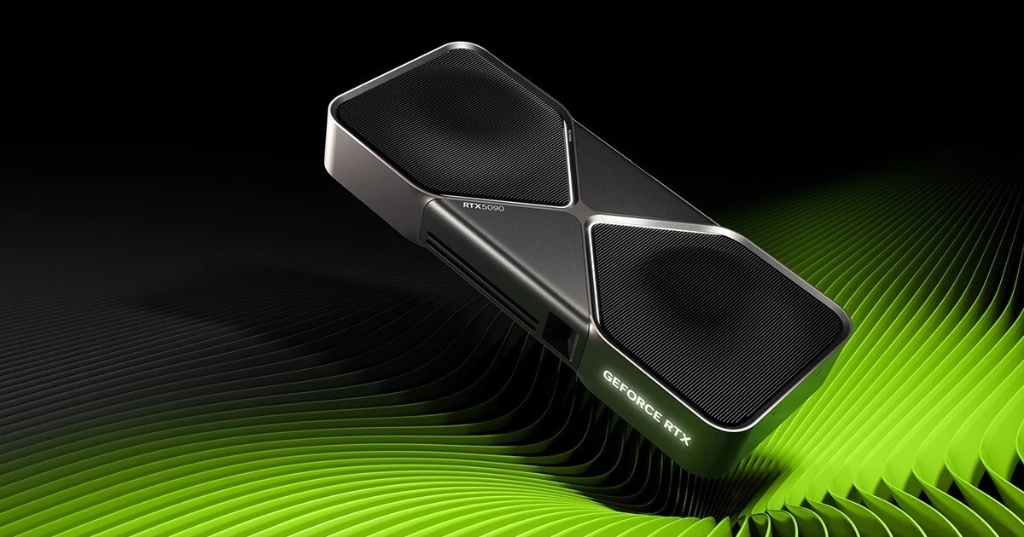
The RTX 5090 accounts for the largest increase, and it moved by a similar amount in both conditions. Its lowest new-condition asking price rose 64%, from $3,004 to $4,920.99. That new-condition floor sits about 146% above NVIDIA’s unchanged launch MSRP of $1,999. Reports that NVIDIA has stopped producing the card offer one possible explanation, which we examine below.
The RTX 40 series produced the broadest increases. The lowest used asking price rose by at least 19% for all ten models, with a median increase of about 30%. The RTX 4070 had the largest increase, at 43%. For anyone holding RTX 40-series cards from a workstation refresh, the low end of the advertised market has risen about 30% since August.
One limitation governs every figure that follows. We measure asking prices — the amounts sellers request — rather than completed transactions. The data shows that the lowest advertised prices have risen sharply. It does not establish what buyers actually paid.
RTX 50 series
New-condition asking-price floors
| Model | Aug 8 | Oct 11 | Change |
|---|---|---|---|
| RTX 5090 32GB | $3,004 | $4,920.99 | +64% |
| RTX 5080 16GB | $1,250 | $1,450 | +16% |
| RTX 5070 Ti 16GB | $887 | $1,007.98 | +14% |
| RTX 5070 12GB | $579 | $725 | +25% |
| RTX 5060 Ti 16GB | $590 | $617.99 | +5% |
| RTX 5060 Ti 8GB | $380 | $449.95 | +18% |
| RTX 5060 8GB | $320 | $399.99 | +25% |
Used asking-price floors
| Model | Aug 8 | Oct 11 | Change |
|---|---|---|---|
| RTX 5090 32GB | $3,680 | $5,879.80 | +60% |
| RTX 5080 16GB | $1,200 | $1,449.99 | +21% |
| RTX 5070 Ti 16GB | $825 | $1,050 | +27% |
| RTX 5070 12GB | $580 | $699.99 | +21% |
| RTX 5060 Ti 16GB | $590 | $649 | +10% |
| RTX 5060 Ti 8GB | $365 | $410 | +12% |
| RTX 5060 8GB | $290 | $359.99 | +24% |
Against launch prices
| Model | VRAM | MSRP | New floor | Above MSRP |
|---|---|---|---|---|
| RTX 5060 Ti 8GB | 8GB | $379 | $449.95 | +19% |
| RTX 5070 12GB | 12GB | $549 | $725 | +32% |
| RTX 5060 8GB | 8GB | $299 | $399.99 | +34% |
| RTX 5070 Ti 16GB | 16GB | $749 | $1,007.98 | +35% |
| RTX 5060 Ti 16GB | 16GB | $429 | $617.99 | +44% |
| RTX 5080 16GB | 16GB | $999 | $1,450 | +45% |
| RTX 5090 32GB | 32GB | $1,999 | $4,920.99 | +146% |
Launch prices are those NVIDIA announced at CES 2025, at the RTX 5060 Ti launch, and at the RTX 5060 launch.
Two things in these tables are worth drawing out. Excluding the RTX 5090, the largest increases in new-condition asking prices were for the RTX 5060 and RTX 5070, both up 25%. The 16GB models rose between 5% and 16%. And the RTX 5060 Ti 8GB, at 19% above its launch price, is the only RTX 50 card still within shouting distance of what NVIDIA originally charged.
RTX 5090: why the price is surging
NVIDIA has never changed the $1,999 launch MSRP, and it does not need to for asking prices to climb. Every dollar above that figure has been added by board partners, distributors and sellers.
The production reports
On October 10, Tom’s Hardware reported that NVIDIA has stopped producing the RTX 5090 and redirected its GB202 processor to RTX Pro cards built for AI data centers, where the same silicon earns considerably more. A 24GB RTX 5080 is rumoured to replace it as the consumer flagship.
None of this is confirmed. The reporting rests on leaked factory notices and hardware leakers, NVIDIA has issued no statement, and the outlets covering it describe it as a rumour. It also pays to separate three events that are easily conflated: halting chip allocation, ending manufacturing, and exhausting retail inventory. The reports describe the first two, and existing stock in the channel could keep cards available for some months yet.
If the reports are accurate, an expected end to replenishment could help explain the price surge. Buyers may be willing to pay more for remaining stock if they expect supplies to shrink.
Memory costs are real but insufficient
The memory shortage is the explanation most often given for the RTX 5090’s price. It is worth testing against the numbers.
GDDR7 has been reported at roughly $20 per 2GB module, which puts the memory content of a 32GB card at about $320. Our new-condition floor of $4,920.99 sits about $2,900 above the launch MSRP. For memory costs alone to have driven that, the memory would have had to become roughly $2,900 more expensive — nine times the total value of the memory now on the card, which would require it to have been deeply negative at launch.
Memory is clearly part of the story. It cannot be most of it.
NVIDIA did raise the price of the kits it supplies to board partners in July, by a reported 20% to 30% across both GDDR6 and GDDR7 products, and that reporting attributes the increase to memory alongside higher board, cooling and packaging costs. We covered the mechanism in detail in an earlier piece on why RTX 5090 prices keep climbing.
Other possible contributors include the reported shift of chips toward professional products, limited retail supply, and demand from buyers building AI workstations.
A floor is not a market level
One point about how to read every number in this report, and the 5090 shows it most clearly.
Each figure in our tables is the lowest qualifying asking price, not an average or a typical one. At the top of the range that distinction carries real weight, because a single seller clearing stock can set the floor several hundred dollars below where the rest of the listings sit. The $4,920.99 new-condition figure should be read as the cheapest 5090 we could find advertised, not as what a buyer should expect to pay.
The used floor makes the same point from the other direction, and more sharply. At $5,879.80 it sits $958.81 above the new floor — an outcome no buyer would accept if both cards were equally available. Two things allow it. A cheap new-condition listing is only worth what it can actually deliver, and first-party RTX 5090 stock in the US has been reported as largely unavailable, so the two floors may not be competing for the same buyer. And because a listing does not have to sell in order to enter our data, a seller pricing against an expected replacement cost is counted whether or not anyone pays that price.
Five models in this report show the same inversion, and we return to them below.
RTX 40 series
This generation is out of production, so its new-condition listings represent leftover stock rather than a resupplied retail channel. Residual stock is priced by whoever still holds it, which produces unusually wide ranges — the RTX 4090’s new-condition listings span $2,083.48 to $3,800. Used listings come from a deeper and more active pool, so we lead with those.
Used asking-price floors
| Model | Aug 8 | Oct 11 | Change |
|---|---|---|---|
| RTX 4090 24GB | $2,199 | $2,800 | +27% |
| RTX 4080 Super 16GB | $875 | $1,149 | +31% |
| RTX 4080 16GB | $799 | $999.99 | +25% |
| RTX 4070 Ti Super 16GB | $670 | $920 | +37% |
| RTX 4070 Ti 12GB | $540 | $700 | +30% |
| RTX 4070 Super 12GB | $520 | $620 | +19% |
| RTX 4070 12GB | $400 | $569.99 | +43% |
| RTX 4060 Ti 16GB | $500 | $649.99 | +30% |
| RTX 4060 Ti 8GB | $270 | $350 | +30% |
| RTX 4060 8GB | $250 | $297.67 | +19% |
New-condition asking-price floors
| Model | Aug 8 | Oct 11 | Change |
|---|---|---|---|
| RTX 4090 24GB | $2,083 | $2,083.48 | 0% |
| RTX 4080 Super 16GB | $950 | $1,200 | +26% |
| RTX 4080 16GB | $900 | $1,099 | +22% |
| RTX 4070 Ti Super 16GB | $850 | $900 | +6% |
| RTX 4070 Ti 12GB | $599 | $769.99 | +29% |
| RTX 4070 Super 12GB | $550 | $699.99 | +27% |
| RTX 4070 12GB | $551 | $569.99 | +3% |
| RTX 4060 Ti 16GB | $605 | $790 | +31% |
| RTX 4060 Ti 8GB | $320 | $419.99 | +31% |
| RTX 4060 8GB | $300 | $300 | 0% |
Launch prices come from NVIDIA’s Ada announcement, its SUPER refresh, and the RTX 4060 series launch.
Two rows need a note. Only three new-condition RTX 4060 Ti 16GB listings met our criteria, so the reported range may not represent the wider market.
And the RTX 4090’s new-condition floor is effectively unchanged, moving from $2,083 to $2,083.48. The rest of its new-condition listings moved a long way over the same period: the top of that range rose from $2,995 in August to $3,800 in October. So the flat 0% reflects one cheap listing holding the bottom of the range while everything above it climbed — a useful reminder of how little a single floor can tell you on its own.
The RTX 4070 is the clearest illustration of how much changed. In August it was the most ordinary card in the report: used examples were listed comfortably below the $599 it launched at, with a normal discount to new stock. Its lowest used asking price is now $569.99, which is both higher than August and identical to its own new floor.
Across the generation, the gap between the lowest used and new asking prices has narrowed sharply. In August that gap ranged from 6% to 27%, with only the RTX 4090 inverted. In October it ranges from 1% to 18%, the RTX 4070 sits at zero, and for both the RTX 4090 and the RTX 4070 Ti Super the lowest used asking price now exceeds the lowest new asking price.
Five models where used asks exceed new asks
| Model | New floor | Used floor | Difference |
|---|---|---|---|
| RTX 5090 32GB | $4,920.99 | $5,879.80 | +$958.81 |
| RTX 4090 24GB | $2,083.48 | $2,800 | +$716.52 |
| RTX 5070 Ti 16GB | $1,007.98 | $1,050 | +$42.02 |
| RTX 5060 Ti 16GB | $617.99 | $649 | +$31.01 |
| RTX 4070 Ti Super 16GB | $900 | $920 | +$20 |
Two more models are tied, with identical used and new floors: the RTX 4070 at $569.99 and the RTX 3060 12GB at $320. The RTX 5080’s used floor sits one cent below its new floor.
August looked similar in shape: four models inverted and one tied. The count has risen by one, but the size of the gaps changed far more. In August three of the four inversions were under $120, with only the RTX 5090 above that. In October both the RTX 5090 and the RTX 4090 exceed $700.
Why a used card can cost more than a new one
The two causes sketched earlier apply across all five models, not only the 5090.
Availability is the first. A cheap new-condition listing only matters if it can be filled, and where new stock is thin the used market can clear above the cheapest advertised new price. The two figures stop describing the same transaction.
Who sets the price is the second. New-condition listings often come from businesses with inventory systems, pricing policies and competitors. Used listings come from individuals, each deciding alone what to ask, and one possible explanation for the pattern is that they are pricing in anticipation of higher replacement costs. A listing does not have to sell to appear in our data, so an asking price nobody accepts still counts.
One detail is worth noting before moving on: all five of these models carry at least 16GB of memory, and no 8GB card appears among them.
For valuation purposes, a verified offer for a comparable new card can provide a useful benchmark. Check availability, warranty and sale terms before relying on the advertised price — and if the aim is to find out what a card will actually fetch rather than what sellers are asking, a current GPU quote is a firmer number than any listing in this report.
The markup gap between high- and low-memory cards has narrowed
In August the division was wide. Cards with 8GB or 12GB of memory were listed no more than 13% above their launch prices, while cards with 16GB or more were listed at least 18% above — a five-point band with nothing in it.
That band has nearly closed. The 8GB RTX 5060 now asks 34% above its launch price and the 16GB RTX 5070 Ti asks 35%, leaving barely a point between the two groups. They have not merged: the RTX 5060 Ti 16GB and RTX 5080 sit at 44% and 45%, well clear of anything in the lower group. What changed is the boundary, not the separation.
It narrowed because the inexpensive cards caught up rather than because the expensive ones came down. Memory capacity still earns a premium. But capacity alone no longer tells you whether an RTX 50-series card is asking close to its launch MSRP, because the cheapest cards in the line are no longer close either.
A caution on causes. This report measures prices, not the reasons behind them. Rising memory costs are a plausible contributor and the kit price increases cited above support that, but asking-price data on its own cannot separate memory from supply, allocation or demand.
RTX 30 and RTX 20 series: reference tables
Both lines left production years ago. Both columns below show marketplace asking prices. The new-condition figures come from individual sellers and should not be interpreted as typical retail prices. Launch-price comparisons are omitted, since those prices were set in a cost environment that no longer exists.
RTX 30
| Model | New listings | Used | Used floor vs Aug |
|---|---|---|---|
| RTX 3090 Ti 24GB | $2,000–$5,949.99 | $1,500–$2,079.99 | +20% |
| RTX 3090 24GB | $1,550–$1,950 | $1,350–$1,539.99 | +23% |
| RTX 3080 Ti 12GB | $600–$799.99 | $499.99–$599 | +18% |
| RTX 3080 12GB | $600–$999.99 | $450–$600 | +13% |
| RTX 3080 10GB | $400–$495 | $355.92–$390 | +19% |
| RTX 3070 Ti 8GB | $325–$450 | $270–$329.99 | +20% |
| RTX 3070 8GB | $297–$320 | $235–$275 | +3% |
| RTX 3060 Ti 8GB | $250–$349.99 | $225–$273.54 | +13% |
| RTX 3060 12GB | $320–$400 | $320–$349.97 | +31% |
| RTX 3050 8GB | $240–$280 | $169.99–$209.99 | +42% |
The $5,949.99 asking price for a new-condition RTX 3090 Ti is an outlier and should not be treated as representative. The median used increase across the generation is about 19%, which means asking prices are rising even on cards that launched five years ago.
Two details stand out. The lowest used asking price for the RTX 3060 12GB is now $320, compared with $225 for the faster RTX 3060 Ti 8GB. That reverses their price ranking at launch, when the Ti was priced at $399 and the RTX 3060 at $329. And the lowest used asking price for the RTX 3090 rose 23% to $1,350 despite its age. Its 24GB of memory may help explain its continued appeal for workloads that exceed the memory capacity of newer, lower-capacity cards.
RTX 20
| Model | New listings | Used | Used floor vs Aug |
|---|---|---|---|
| RTX 2080 Ti 11GB | $327–$789 | $269.50–$332.10 | +15% |
| RTX 2070 Super 8GB | $244–$629.87 | $175–$199.99 | +17% |
| RTX 2060 6GB | $179–$210 | $120–$159.99 | 0% |
At this age, condition, cooling history, prior workload and return terms matter far more than a small difference in the listing price.
What this means if you are selling retired GPUs
The relevant question here is what surplus hardware might recover, not how it should be depreciated. A depreciation schedule allocates cost according to an accounting policy and was never designed to predict resale value, so nothing in this data suggests an accounting treatment is wrong.
What the data does support is narrower and more useful.
A resale estimate from August is probably out of date. Median used asking floors across the RTX 40 series rose roughly 30% in 64 days, and while that does not mean realized sale prices rose by the same amount, it is reason enough to refresh a quote before accepting an old figure or writing hardware off as having no recovery value. The August edition holds the earlier figures if you want to see what has moved.
Rising asks are not an argument for holding inventory indefinitely. Asking prices are not completed-sale prices. Market conditions — including memory supply, reported changes in chip allocation, and demand from AI buyers — can change and are outside an individual seller’s control. The case for re-checking a valuation is strong; the case for speculating on further increases is not.
Cards with 16GB or more deserve separate attention, since they account for every inversion in this report. For work constrained by memory capacity rather than processing speed, an older card with plenty of memory can still do something a newer card with less cannot, and that shows up in what sellers ask for it.
Organizations with surplus or decommissioned graphics hardware can sell GPUs and request a current quote.
Data notes
What these figures are. Asking prices only — the amounts sellers request. They are not completed sales, appraisals or purchase offers. Each figure is the lowest qualifying asking price we found for that model and condition.
Sources, kept separate. For each model and condition, we screened fixed-price marketplace listings for product identity, condition and duplicates, then selected the ten lowest-priced qualifying listings. Where fewer than ten qualified, we included all of them. Retail research is a separate exercise with cited sources, covering the RTX 40 and RTX 50 series only. We never average the two together.
How the change figures work. Every change is calculated floor to floor on marketplace data, from August 8 to October 11, an interval of 64 days. We use marketplace data for this comparison because we followed the same procedure in both months; our retail research changed format between runs, so comparing those results would mix changes in method with changes in market prices. We compare minimum asking prices rather than averages because averages are sensitive to the number and prices of higher-priced listings included in each sample.
Observed floors are published unchanged. That includes the five rows where a used floor came in above a new floor. An earlier draft lowered those to match the new floor; we dropped that practice, because substituting a calculated value for a measured one stops it being a measurement.
Screening matters most at the top of the range. Listings for expensive cards include a large number of parts and accessories — retail boxes sold empty, fan and heatsink assemblies, bare circuit boards, and cards described as having no GPU core — and these sort to the front of any price-ascending search. Our screening removes them, which is why our floors sit well above the cheapest raw listing for a model. Where screening is imperfect, the error pushes a floor downward, so the increases reported here are more likely understated than overstated.
Two figures to treat with caution. The lowest new-condition RTX 4090 asking price may not be current, as discussed in the RTX 40 section. Only three new-condition RTX 4060 Ti 16GB listings met our criteria, so that range may not represent the wider market. A $30 box-only RTX 4070 Super listing was removed from the published range and retained in the raw audit for traceability.
Also worth knowing. Sample sizes are not uniform across models.
Scope. This report covers NVIDIA consumer cards only. AMD and Intel products would show whether what we are seeing is specific to NVIDIA or market-wide, and that comparison is not included here.