
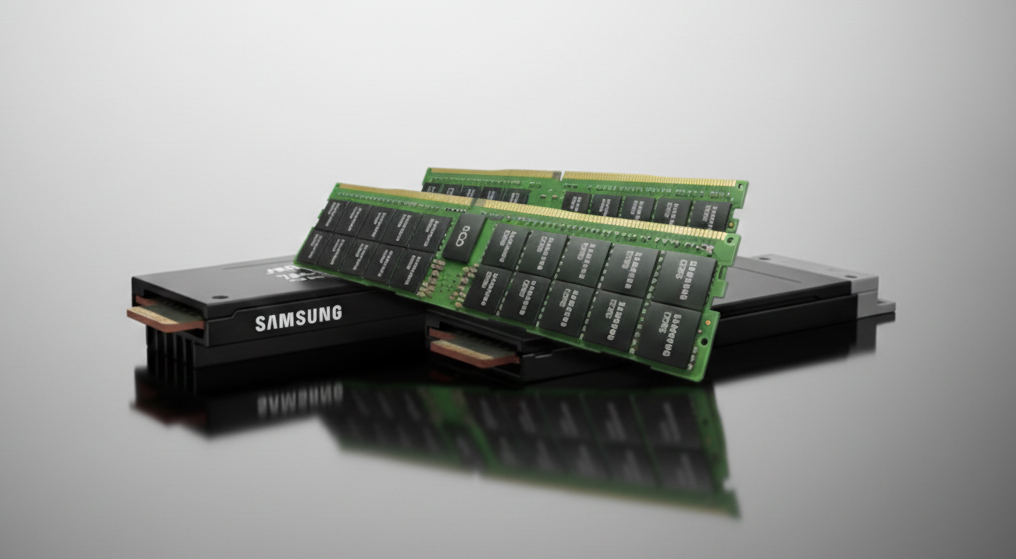
DRAM contract prices are set to jump another 13–30% in Q3
The third-quarter memory numbers are starting to land, and they say the squeeze is nowhere near done.
Contract negotiations point to another 20–30% increase for DRAM and 35–40% for NAND in Q3 2026. The more conservative survey puts it at 13–18% for conventional DRAM and 10–15% for NAND, quarter over quarter. The two forecasts disagree about the size of the jump, not the direction. None of the major forecasters expects prices to fall this quarter.
The same week those numbers surfaced, the industry’s forecast horizon moved. What was described a year ago as a price spike is now being described as a plateau of scarcity.
SK hynix — fresh off a $26.5 billion Nasdaq listing, the largest ever US listing by a foreign company — chose that same day to deliver the bluntest supply forecast of the year and forecast that “next year will be the worst year in the industry’s history from the supply perspective…Customer demand will remain higher than our supply capacity even beyond 2030.”
Shortage past 2030 is a strong claim, and it deserves scrutiny (more on that below). But for data-center operators holding decommissioned DDR4, DDR5, and enterprise drives, even a discounted version of it changes the calculus on hardware that would normally be depreciating quietly on a shelf.
Demand stopped tracking device shipments
Memory has always been cyclical, and the cycle had a reliable engine: PCs and phones. When device shipments rose, DRAM demand rose. When they fell, fabs drowned in oversupply and prices collapsed. Every operator who has ever sold pulled modules into a down market knows the pattern.
The argument now coming out of the fabs is that this engine has lost its grip: AI infrastructure, not device shipments, has become the dominant driver of new memory demand. Training and inference consume memory in proportion to compute deployed, not devices sold. A data center running agentic workloads keeps buying DRAM whether or not anyone buys a new laptop.
The demand side appears to agree. When SK hynix committed to doubling wafer capacity within five years, its customers reportedly called doubling insufficient and asked for five to six times as much supply. Some have reportedly gone as far as offering to buy the company’s EUV scanners and prefund fab lines outright.
The scarcity is even reshaping how memory might be sold. On listing day, SK Group’s chairman floated “memory as a service” (MaaS) — customers renting memory capacity rather than buying the chips outright — as one way to work around the bottleneck. That concept deserves its own article, and it will get one.
The physical constraint matters as much as the demand math. A greenfield fab takes more than five years to bring online, by the company’s own estimate, so capacity announced in 2026 arrives near the end of the decade. That is the arithmetic behind the “worst year” call for 2027: demand keeps compounding while meaningful new supply is still years from first wafer.
Earnings season is confirming the pricing power
None of this is theoretical. With reporting season opening, the shortage is showing up directly on income statements.
Samsung just posted a record $61 billion in preliminary Q2 operating profit, up more than 1,800% from a year earlier, on revenue that more than doubled.
Micron’s fiscal third quarter, reported in late June, was more dramatic still: $41.5 billion in revenue against $9.3 billion a year earlier, with per-share earnings up thirteenfold and guidance near $50 billion for the current quarter. “Micron is investing at record levels in technology, products and supply to address our customers’ rapidly growing demand,” CEO Sanjay Mehrotra said with the release. Record capital spending, chasing demand it still cannot meet.
One caveat on reading those income statements: earnings this explosive reflect product mix and HBM margins as much as raw scarcity, so they overstate the squeeze in commodity DRAM somewhat. But margins like these do not happen in a balanced market.
How the squeeze reaches the used market
The transmission mechanism is wafer allocation. HBM consumes far more wafer area per bit than standard DRAM and carries the fattest margins, so fabs keep tilting capacity toward it and toward AI-server parts. Standard DDR4 and DDR5, along with consumer and enterprise NAND, get whatever is left — and server DRAM remains undersupplied even with long-term agreements moderating the pace of contract increases.
Buyers who cannot get new modules at tolerable prices go looking for pulled ones. The result is the strange situation the secondary market has been in for several quarters: resale values for decommissioned DDR4 and DDR5, and for enterprise drives alongside them, have climbed far above normal depreciation curves — in many cases above what the hardware was worth when it left the rack.
The same dynamic has been visible in processors, as covered in an earlier look at server CPU prices in mid-2026.
New suppliers will not change this quickly, either. Chinese DRAM maker CXMT has started appearing in mainstream consumer channels, but server memory is a qualified part. Modules have to pass platform validation and customer certification cycles that run months to years, so capacity that is not qualified for enterprise platforms does not relieve enterprise scarcity.
The honest tension
Two caveats belong in any piece like this.
Chipmakers forecasting scarcity through 2030 have an obvious interest in the market believing it — scarcity is their margin. And equity investors, who get paid to be skeptical, flinched even at that record quarter: Samsung shares fell roughly 7% on the announcement as traders read blowout earnings as a possible cycle peak.
The Q3 pricing data tells a similar half-story: prices still rising, but more slowly, because PC and smartphone buyers are hitting the ceiling of what they can pay.
So there are two readings. Either the shortage runs to 2030 as the manufacturers claim, or consumer demand destruction and eventual capacity additions bend the curve down sooner than they expect.
Here is the useful observation: for anyone holding retired hardware, both readings point the same way. If the shortage persists, resale values stay strong and a regular selling schedule captures them. If the cycle turns, the operators who cleared inventory while prices were high will look considerably smarter than the ones who waited for a peak that had already passed.
What 2027 likely means for sellers
Taking the supply arithmetic at face value — and the fab lead times make it hard to dismiss — 2027 should be tighter than 2026 for standard server memory. The used market keeps functioning less like a clearance channel and more like a structural source of supply. Expect contract price growth to keep decelerating as consumer buyers max out, while allocation-starved DDR4, DDR5, and enterprise SSDs stay scarce enough to hold resale values well above historical norms.
Retired hardware appreciating on a shelf is an anomaly. Normally the meter only runs backward: gear comes out of the rack, loses value every month, and eventually costs money to dispose of. Right now the meter is running forward — but that value exists only on paper until the modules actually ship. Paper value in a market this dependent on AI capital spending is a fragile thing to build a budget on.
The practical move is not timing the top. It is putting disposition on the decommission schedule: when hardware comes out of service, it goes to market within the quarter, every quarter, regardless of where prices sit that week. A steady clearance rhythm captures strong pricing without the guesswork, and it frees shelf space besides.
The first step costs nothing: audit what is already sitting on shelves. Valuation is spec-driven, so the audit should capture:
- DDR generation and module capacities
- ECC/RDIMM versus UDIMM
- For drives: health data and total bytes written
With that list in hand, getting a real quote takes minutes through a memory buyback service or one for enterprise SSDs and drives. The market is saying, loudly and from several directions at once, that this is a good year to be a seller. Worth listening while it lasts.