
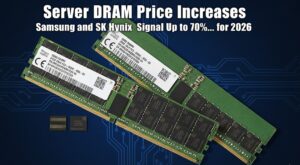
Samsung and SK Hynix Signal Up to 70% Server DRAM Price Increases for 2026 (Image Edited from SKHynix.com
A Korea Economic Daily Report Highlights Tightening Supply in the Server Memory Market
According to a January 5, 2026 report from Korea Economic Daily (KED Global), South Korea’s leading memory manufacturers — Samsung Electronics and SK Hynix — are seeking to raise server DRAM contract prices by as much as 60%–70% in the first quarter of 2026, compared with Q4 2025 levels.
The report cites industry sources involved in ongoing negotiations, indicating that the proposed increases are primarily focused on server DRAM, reflecting strong demand from data centers and AI infrastructure deployments. While the article notes that similar price discussions have been extended to PC and smartphone DRAM customers, server memory remains the central driver behind the proposed increases.
Why Server DRAM Is Under the Most Pressure
The KED report underscores a structural shift in the memory market, where server-grade DRAM is increasingly prioritized over consumer segments.
1. AI and Cloud Infrastructure Are Driving Server DRAM Demand
Modern AI servers require large-capacity DDR4 and DDR5 memory configurations, often paired with accelerators using HBM. As AI workloads scale, DRAM content per server continues to rise, tightening supply in the server segment.
2. Memory Makers Are Allocating Capacity Strategically
Samsung and SK Hynix have been directing more advanced production capacity toward HBM and high-margin server memory, leaving less flexibility for traditional volume-driven pricing.
3. Contract Pricing Is Being Reset for 2026
Server DRAM is typically sold through long-term or quarterly contracts, making Q1 2026 a critical reset point. The reported 60%–70% proposal reflects aggressive opening positions in these negotiations, not finalized pricing.
Proposal vs. Confirmation: How to Read the 60%–70% Figure
It is important to clarify that the reported increase represents pricing proposals, not officially confirmed contract outcomes.
Historically in the DRAM market:
-
Initial proposals often set a high negotiation anchor
-
Final pricing may settle below headline figures
-
However, once suppliers push for increases at this scale, the overall direction rarely reverses
So far, major international outlets such as Reuters and Bloomberg have confirmed tight server memory supply and rising prices, but have not yet validated the exact 60%–70% range. This positions the KED report as a leading indicator of supplier intent, particularly in the server DRAM segment.
What This Means for the Server Memory Secondary Market
For enterprises, data centers, and IT asset managers, the implications of potential server DRAM price increases are significant:
-
Server DRAM inventory may appreciate in value if contract prices reset higher in 2026
-
DDR4 and DDR5 server modules could see stronger secondary-market demand as buyers seek cost-effective alternatives to new supply
-
Organizations delaying hardware refresh cycles may increasingly turn to used or refurbished server memory to manage capital expenditures
If supplier pricing power continues to strengthen, the secondary market may play a larger role in balancing availability and cost, particularly for standardized server memory configurations from leading manufacturers such as Samsung, SK Hynix, Micron, and Kingston.
For readers evaluating market pricing or disposition options, BuySellRam.com provides visibility into current secondary-market demand for server DRAM.
Strategic Takeaway: Server DRAM Is Leading This Cycle
Unlike previous memory cycles driven primarily by consumer electronics, the current pricing momentum is being led by server and AI infrastructure demand. The reported pricing proposals suggest that memory suppliers believe structural demand — not short-term shortages — now supports higher contract levels.
Even if finalized increases land below the headline figures, the broader signal remains intact: server DRAM pricing leverage has shifted back toward suppliers. This dynamic may persist as long as AI workloads continue to raise memory density requirements per server.
For organizations holding surplus or underutilized server memory, this environment presents an opportunity to reassess inventory strategy before supply conditions or pricing expectations normalize.
Selling Surplus Server RAM in a Rising-Price Environment
As demand for server DRAM continues to tighten, many organizations are taking a closer look at excess or recently retired hardware. In particular, surplus DDR4 and DDR5 server memory, along with enterprise-grade modules removed from data center deployments, is increasingly being viewed not just as legacy inventory, but as a monetizable asset. During periods when contract prices are rising, liquidity in the secondary market often improves—especially for widely deployed server DRAM SKUs that remain compatible with current platforms.
FAQ: Server DRAM Market and Surplus Memory
Q1: Why are server DRAM prices rising so sharply in 2026?
Server DRAM demand is increasing due to growing AI and cloud infrastructure workloads. Limited supply and strategic allocation by manufacturers like Samsung and SK Hynix are driving proposed contract price increases of up to 60–70% in Q1 2026.
Q2: Which types of memory are most affected?
The price pressure is concentrated on server-grade DDR4 and DDR5 modules, though some proposals also touch PC and smartphone DRAM. Enterprise memory from data centers is particularly impacted due to high demand from AI and cloud applications.
Q3: What does this mean for businesses holding surplus server memory?
Organizations with excess or retired server RAM may see increased secondary-market value. Proper timing and evaluation can help maximize returns while meeting ongoing IT hardware needs.
Q4: How can businesses monetize surplus memory?
Businesses can assess or sell surplus DDR4, DDR5, and enterprise-grade server memory through secondary-market channels. For those exploring this option, Sell RAM provides a way to evaluate and transact excess inventory safely and efficiently.
BuySellRam.com operates within the secondary memory market, supporting bulk server memory transactions and providing a reference point for businesses evaluating the resale value of surplus server DRAM. Organizations looking to assess or liquidate excess inventory can find additional information through its Sell Used Memory program.