
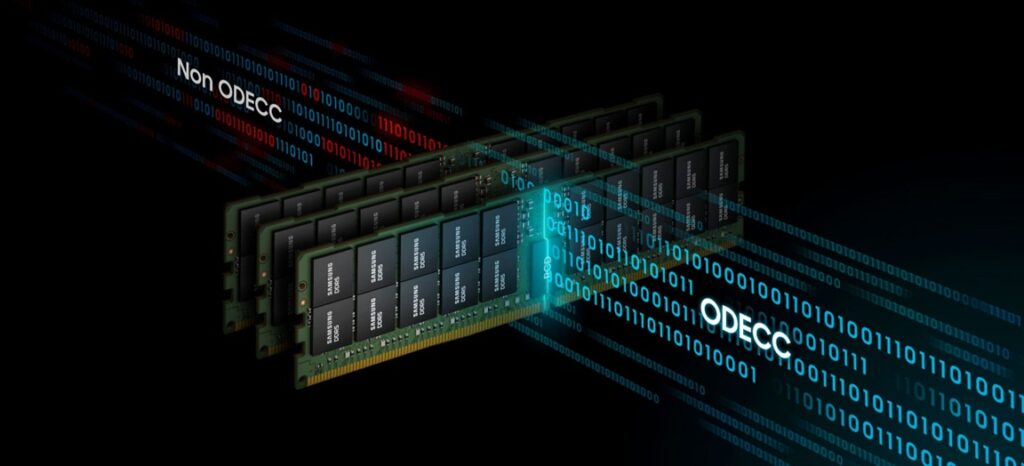
Samsung’s 100% DRAM Price Hike (credits: samsung.com)
The memory market has just entered a state of emergency. As we move into early March 2026, the tech industry is grappling with a supply-chain shock that is being dubbed “Rampocalypse 2.0.” What was once a predicted “cyclical recovery” has mutated into a full-blown crisis, led by a historic pricing maneuver from Samsung Electronics.
The numbers are no longer just aggressive—they are unprecedented. According to recent reports, Samsung has finalized its Q1 DRAM supply negotiations with price hikes exceeding 100% for its major global customers. This marks a massive escalation from the 70% increase initially projected in January, leaving hardware manufacturers and IT departments in a state of panic.
The Apple Surrender: A Watershed Moment
In the world of procurement, Apple is usually the “Final Boss.” Their massive order volumes and legendary supply chain control typically allow them to dictate prices to suppliers. However, in a move that signals a total shift in market power, Apple has reportedly accepted Samsung’s 100% price hike without negotiation.
According to sources cited by MacRumors, Samsung’s semiconductor division originally planned to target a 60% increase for the LPDDR5X modules destined for the iPhone 17. In a bold “anchoring” tactic, Samsung proposed a 100% hike as their opening bid. To the shock of industry insiders, Apple accepted the figure immediately during emergency meetings to secure inventory for the first half of 2026.
When the most powerful buyer in the world stops negotiating and starts “panic-buying” at double the cost, it sends a clear message to every other player in the market: Inventory is now more valuable than cash.
The Anatomy of a 100% Surge: DRAM and NAND
This isn’t just limited to a single product line. The “Rampocalypse” is a multi-front assault on hardware budgets.
-
Generic DRAM: Contract prices for standard PC and server DRAM have effectively doubled compared to Q4 2025. 12GB LPDDR5X modules that were priced at $25–$29 just a year ago are now hitting the $70 mark.
-
NAND Flash: Not to be outdone, NAND prices have also surged by 100%, driven by “super incremental” demand for storage in AI servers.
-
The 70% to 100% Leap: The fact that prices jumped from a planned 70% hike to a finalized 100% hike in just one month indicates that demand is accelerating faster than Samsung’s internal sales teams could track.
The “AI Vacuum”: Why Supply is Vanishing
The root cause of this imbalance is the “AI Gold Rush.” Hyperscalers like NVIDIA, Microsoft, and Google are currently operating like a giant vacuum, sucking up every available silicon wafer.
To meet the demand for High Bandwidth Memory (HBM)—the specialized RAM that powers AI accelerators—manufacturers like Samsung, SK Hynix, and Micron are reallocating their production lines. As reported, HBM production consumes approximately three times the wafer capacity of standard DRAM per gigabyte.
By shifting factories to HBM to chase higher margins, the industry has effectively created a structural shortage of the “generic” RAM used in our phones, laptops, and enterprise servers. Analysts at Gartner and IDC suggest that AI data centers will consume up to 70% of all high-end DRAM production in 2026, leaving the rest of the world to fight over the remaining 30%.
The “End-Side AI” Factor
Adding fuel to the fire is the rise of “End-Side AI” (On-device AI). As manufacturers push for AI-capable PCs and smartphones, the minimum RAM requirement for these devices has shifted. A premium smartphone that once ran comfortably on 8GB now requires 12GB or 16GB just to handle local Large Language Models (LLMs). This per-device capacity increase, combined with doubling prices, is creating a “perfect storm” for consumer electronics inflation.
Consumer and Enterprise Fallout
The “Rampocalypse” is no longer just a supply-chain headline; it has officially reached the retail shelf. The ripple effects are fundamentally reshaping what consumers pay for technology.
-
PC and Laptop Contraction: Gartner and IDC have issued a grim outlook for 2026, projecting a 10.4% to 11.3% decline in global PC shipments. The driver? A massive shift in production costs. HP’s CFO recently revealed that memory now accounts for 35% of a PC’s total build cost, up from roughly 15% last year. As a result, the “budget” $500 laptop is effectively disappearing, with average retail prices expected to climb by 17% this year.
-
The Apple Strategy: In a surprising move during the March 2026 launch of the iPhone 17e, Apple chose to keep the starting price flat at $599 while actually doubling base storage to 256GB. By “eating” the 100% memory price hike to maintain market share, Apple is leveraging its massive services revenue to offset thinning hardware margins—a luxury smaller competitors don’t have.
-
The China Market Surge: Unlike Apple, Chinese giants like Xiaomi, Oppo, and Vivo are passing costs directly to consumers. Reports from early March show average price hikes of 15% to 25% for new models compared to 2025. With procurement costs for memory modules up 80% year-over-year, these brands are facing the broadest collective price increase in five years.
-
Samsung’s S26 Mitigation: Even Samsung’s own mobile division is feeling the squeeze from its semiconductor arm. To mitigate the “Silicon Sticker Shock,” Samsung is splitting its S26 DRAM orders 50/50 between Samsung DS and Micron and increasing the use of its in-house Exynos 2600 chips to 30% of units. While base prices for the S26 may hold steady, high-capacity models like the 1TB Ultra are seeing significant regional increases to cover the 100% hike in NAND and DRAM costs.
A Strategic Pivot for the Secondary Market
The 2026 “Rampocalypse” has fundamentally flipped the script on hardware depreciation. With new supply capped at roughly 60% of global demand, the secondary market has transformed from a mere backup into a critical “Silicon Goldmine.” For the first time in a decade, decommissioned server RAM and refurbished modules are behaving like appreciating assets, allowing IT managers to turn perceived e-waste into high-liquidity capital.
The most striking phenomenon is the “Scissor Gap” Advantage. Because production has pivoted toward AI-focused HBM, legacy DDR4 supply is evaporating faster than DDR5. This has caused a “price inversion” where DDR4 spot prices have surged by 172%, outpacing newer standards. Organizations are now moving to sell RAM in bulk, capitalizing on these record peaks to subsidize their transition to modern infrastructure. By leveraging high-quality, tested secondary modules, data centers are successfully “sweating the asset”—extending hardware lifespans and bypassing factory lead times that now stretch past 20 weeks.
Looking Ahead: Is There an End in Sight?
The current consensus among industry experts—including those at The Register and Counterpoint Research—is that this “Hyper-Bull” phase will persist well into 2027. Samsung’s new P4 plant in Pyeongtaek isn’t expected to bring significant new capacity online until late 2027 or early 2028.
As we move through Q2 2026, we expect to see:
-
Monthly Contract Shifts: The traditional quarterly price negotiation is dying. Suppliers are moving to monthly “spot-based” contracts to capture every cent of the rising market.
-
Tier-2 Squeeze: While giants like Apple can pay to play, smaller hardware makers may find themselves completely “frozen out” of the supply chain.
-
Inventory Hoarding: Much like the GPU crisis of years past, we expect to see large enterprises “hoarding” RAM modules to protect against future hikes.
The “Rampocalypse” is a fundamental repricing of technology. When the price of memory doubles, the price of the digital world follows. Whether you are a consumer looking to buy a laptop or a CTO planning a data center expansion, the strategy for 2026 is simple: Secure what you need now, or be prepared to pay the AI premium.