
AI Is Causing a Global CPU Shortage.
If you’ve tried to buy a server CPU lately, you’ve probably noticed something alarming: prices are up, lead times are stretching into months, and the chips you need might simply be unavailable. This isn’t a supply chain hiccup or a temporary logistics snag. It’s the direct result of a seismic shift happening inside the world’s data centers — and artificial intelligence is behind all of it.
In 2026, the global CPU market is experiencing one of the most dramatic demand surges in recent memory. Server-grade processors from both Intel and AMD are effectively sold out for much of the year, prices have jumped as much as 20%, and lead times that used to run one to two weeks are now stretching anywhere from eight to twelve weeks for AMD chips and up to a year for Intel Xeon. For IT managers, procurement teams, and business owners, this creates real pain. Understanding why it’s happening is the first step toward navigating it smartly.
From Chatbots to Agents: How AI Changed the CPU Equation
To understand the CPU shortage, you have to understand the evolution happening inside AI itself. For the past few years, most AI deployments were about training — feeding massive neural networks enormous datasets to teach them how to respond. Training is brutally GPU-intensive, and it kicked off the well-known GPU shortage that dominated tech headlines through 2024 and 2025.
But the AI landscape has shifted. The industry has moved from building models to deploying them — specifically to running autonomous AI agents that handle real-time inference tasks at massive scale. Inference is different from training. It requires far more back-and-forth coordination between the CPU and GPU, and as workloads become more “agentic” — meaning the AI is making decisions and calling tools in real time — the CPU becomes as critical to performance as the GPU sitting next to it.
Intel has been explicit about this dynamic. The company noted that as AI shifts toward agentic inference, the ratio of CPUs to GPUs in a data rack could tighten dramatically — from the traditional 1:4 or 1:8 ratio all the way down to 1:1 in some deployment scenarios. That means for every AI server that gets built, the demand for CPUs is multiplying far faster than anyone anticipated just a year ago.
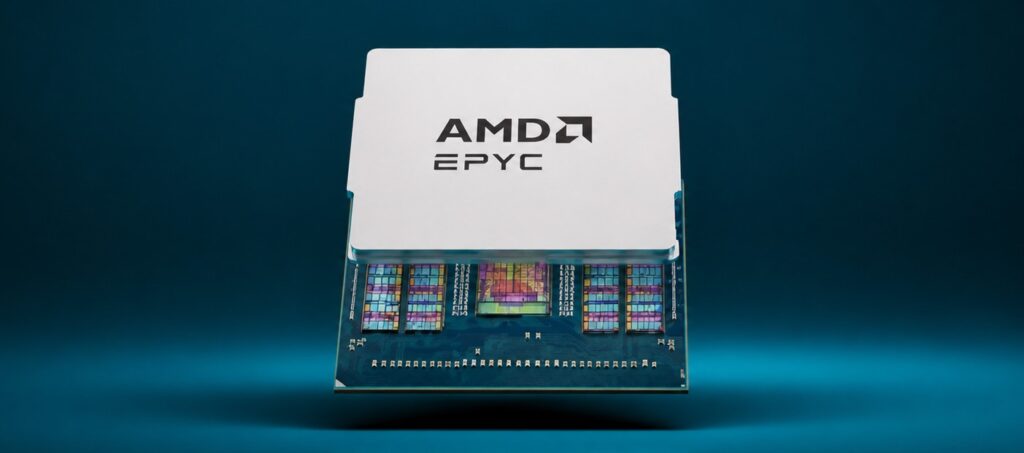
The result? Intel is already supply-constrained on Xeon, with unmet demand reportedly in the billions of dollars. AMD’s server CPU business is similarly stretched, with its 5th Gen EPYC chips accounting for over 50% of AMD’s server revenues for the first time — a milestone that reflects just how aggressively the data center market is buying.
The Numbers Tell the Story
The statistics coming out of early 2026 paint a vivid picture of just how tight the market has become.
Server CPU shipments surged dramatically in Q4 2025 and into 2026. Intel’s datacenter deliveries grew at nearly double the seasonal average, while AMD’s grew at more than triple. Hyperscale customers — AWS, Microsoft, Google — locked in advance orders early, and AI server shipments are expected to grow approximately 28% across 2026. The customers left scrambling are mid-market enterprises and businesses that didn’t anticipate the crunch.
On the pricing front, Intel and AMD have both pushed through significant increases since March 2026. Server-grade chips have jumped by as much as 20%, with consumer-oriented CPUs up 5% to 10% over the same period. Analysts are projecting another round of increases of 8% to 10% in the second half of the year. For anyone building or refreshing server infrastructure, the cost calculus has changed dramatically.
Supply constraints are being compounded by manufacturing pressures. TSMC — the foundry that produces AMD’s chips — is prioritizing its most advanced production lines for high-margin AI accelerators and next-generation GPU orders, leaving less production capacity available for traditional CPU volume. Intel, meanwhile, has been working through yield challenges at its own fabs while simultaneously trying to ramp Intel 18A, its new cutting-edge process node.
What’s Coming: A Glimpse at Next-Gen CPUs
The shortage is creating a particularly tricky decision point for businesses: do you pay elevated prices for today’s chips, or wait for next-generation hardware that promises significantly better performance?
Intel introduced its Core Ultra Series 3, built on the new Intel 18A process node, at CES 2026 — the first AI PC platform on that cutting-edge architecture. More consequentially for enterprise buyers, Intel’s “Clearwater Forest” server CPU, introduced at MWC 2026, packs up to 288 cores in its maximum configuration and represents Intel’s first 18A server chip. It’s expected to ship later in 2026.
On the desktop and mainstream side, Intel’s “Nova Lake” (Core Ultra Series 4) is confirmed for late 2026, bringing up to 52 cores, a new Xe3 integrated GPU, and a new LGA 1954 socket that Intel is committing to support across multiple generations — a meaningful change from its historical practice of frequent socket changes. AMD, meanwhile, has confirmed Zen 6 CPUs are on track for 2026, built on TSMC’s next-generation 2nm (N2) process node, with expanded AI capabilities via onboard NPUs.
However, multiple industry sources now report that both AMD Zen 6 and Intel Nova Lake are delayed, with mainstream desktop launches pushed to CES 2027 due to industry-wide manufacturing pressures. For businesses that can’t wait, the calculus favors acting now — especially if your server refresh is already overdue.
What This Means If You’re Managing IT Assets
The 2026 CPU shortage carries a clear message for businesses on both sides of the hardware equation.
If you’re buying: Plan further ahead than you ever have before. Lead times are long, prices are still climbing, and the “buy now” calculus looks increasingly favorable compared to waiting for next-gen chips that may themselves be delayed. Work with reputable ITAD partners and secondary market suppliers who can source certified, tested equipment without the six-month wait of new chip orders.
If you’re selling or upgrading: You’re sitting on more value than you might realize. With new server CPUs scarce and expensive, the used server market has tightened considerably. Organizations holding older-generation Intel Xeon or AMD EPYC servers — even machines a generation or two behind — are finding that those assets command strong prices right now. If a server refresh is on your roadmap, the time to act is now, before conditions shift.
If you’re running mixed or aging infrastructure: The AI-driven demand surge is a reminder that CPU capability increasingly determines whether your infrastructure can keep up with modern workloads. Inference-heavy applications, AI-assisted tools, and agent-based software are putting real pressure on CPU performance. Aging infrastructure that felt adequate a year ago may be creating bottlenecks today.
The Bigger Picture: CPUs Are Back
For years, the dominant narrative in tech hardware was that GPUs were the center of the universe — and for AI training, that was true. But 2026 is establishing a different reality: CPUs are back at the center of the conversation, and their strategic importance has never been higher.
The shift to agentic AI has re-elevated the CPU from a commodity component to a critical, scarce resource. The companies that manage this reality well — that plan procurement strategically, maximize the value of their current assets, and partner with knowledgeable hardware suppliers — will have a meaningful advantage over those caught flat-footed by the shortage.
Intel and AMD are both racing to close the supply gap, and the next wave of hardware promises to bring substantial performance improvements. But for the next 12 to 18 months, the market is tight, prices are elevated, and smart asset management matters more than ever.
Turn the Shortage Into an Opportunity
The 2026 CPU crunch doesn’t have to work against you. If your organization is sitting on older Intel Xeon or AMD EPYC processors, desktops, or servers that are no longer in active use, now is one of the best times in recent memory to recover value from that hardware. Demand for used and refurbished enterprise CPUs is high, buyers are motivated, and prices reflect the tight market.
Working with a reputable BBB A+ rated ITAD company means you get a fair, transparent process — quick assessment, competitive offers, and none of the hassle of selling hardware piecemeal on your own.
If you’re ready to put your idle CPUs to work, you can Sell CPU through a trusted ITAD partner and get top dollar while the market is in your favor.