
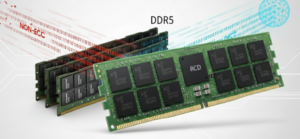
DRAM Supply Crunch Continues
The DRAM supply crunch shows no signs of easing, driven by the surging demand from AI workloads and high-performance computing. What was once a cyclical market prone to oversupply has transformed into a seller’s market, with memory and storage components in increasingly short supply. Major cloud service providers (CSPs) are making unprecedented moves to secure future capacity, signing multi-year contracts that may extend their access to crucial DRAM and compute resources through 2028.
This is more than routine business—it’s a strategic race in the AI era. Here’s a closer look at the DRAM supply crunch, why prices are unlikely to return to normal in 2026, and what it means for enterprises, startups, and the broader tech ecosystem.
The Unprecedented Demand: AI’s Memory Hunger
The driving force behind this shift is the explosive growth of Artificial Intelligence. Training and running sophisticated AI models, particularly large language models (LLMs) and generative AI, require astronomical amounts of high-bandwidth memory (HBM), DDR5 DRAM, and high-performance NAND storage.
Unlike traditional computing tasks, AI workloads are memory-intensive, demanding not just sheer capacity but also incredible speed and efficiency. This has created a bottleneck in the supply chain, as memory manufacturers struggle to ramp up production to meet this sudden, massive surge in demand. [1][2][3]
CSPs Go Long: Two-Year Contracts & 2028 Capacity Locks
Leading Cloud Service Providers like Amazon Web Services (AWS), Oracle, Microsoft Azure, and Google Cloud are at the forefront of this AI race. To guarantee the resources needed for their own AI services and for their enterprise clients, these hyperscalers are engaging in aggressive, long-term contracting.
Consider these developments:
Oracle’s Mega Deals: Recent news highlighted Oracle’s significant cloud service agreements, with one massive deal projected to generate over $30 billion annually starting in fiscal year 2028. While details on specific hardware are often confidential, such long-term, high-value contracts invariably imply pre-secured access to vast amounts of compute, memory, and storage capacity for years to come.
AWS’s Infrastructure Offensive: Amazon Web Services has pledged a monumental $50 billion investment into dedicated AI and supercomputing infrastructure for US federal agencies. With construction beginning in 2026 and initial facilities slated for operation by 2028, this multi-year roadmap underscores a proactive strategy to lock in future compute and memory resources. This isn’t just about building data centers; it’s about guaranteeing the components that fill them.
These long-term commitments are a clear signal: CSPs are betting big on AI’s future, and they’re not waiting for market fluctuations. They are securing their supply lines years in advance to avoid being caught short.
The Seller’s Market: Extending to 2027 and Beyond
The consequence of this aggressive procurement by hyperscalers is a hardened seller’s market for memory and storage components. Industry analysts and manufacturers now largely agree that:
- DRAM and NAND constraints are expected to persist well into 2026. [4]
- The market equilibrium might not be restored until 2027 or even 2028. [5]
- The fundamental reason: memory chip fabrication plants (fabs) take years to design, build, and bring online. Decisions made today about wafer allocation and fab expansion will only impact supply in 2027 or 2028. This inherent lag in manufacturing capacity means current demand significantly outstrips the ability to supply.
This sustained period of high demand and limited supply translates directly into higher prices and reduced bargaining power for buyers.
What This Means for Enterprises, Startups, and Consumers
Increased Costs & Longer Lead Times: For non-hyperscaler enterprises, AI startups, and even PC manufacturers, securing cutting-edge memory and storage will become more expensive and require longer lead times. This could impact IT budgets, product development cycles, and the competitiveness of smaller players.
Strategic IT Planning is Crucial: Businesses must plan their IT upgrades and AI initiatives with a much longer outlook. Proactive procurement, strategic partnerships, and exploring alternative solutions (like efficient software, optimized data structures, or even leveraging existing hardware more effectively) will be paramount.
Innovation in Efficiency: The memory crunch could spur innovation in memory optimization, more efficient AI algorithms, and new approaches to data processing that reduce reliance on sheer hardware quantity.
A Boost for the Secondary Market: As primary market components become scarce and expensive, the secondary market for enterprise IT hardware (like used RAM, CPUs, and GPUs) could see increased activity, offering a viable alternative for cost-conscious organizations.
Navigating the DRAM Supply Crunch
The AI revolution is reshaping the entire IT supply chain, with memory and storage at its epicenter. For businesses, startups, and IT professionals, the DRAM supply crunch and elevated prices mean planning ahead is no longer optional—it’s essential. Securing memory for AI workloads or high-performance computing requires foresight, strategic partnerships, and exploring alternatives, including more efficient software or optimized hardware usage.
For organizations looking to reduce costs or avoid long lead times, the secondary market for enterprise IT hardware is becoming increasingly valuable. Platforms that allow you to sell RAM and other components offer a practical way to maximize returns from existing hardware while meeting immediate memory needs. In a market where DRAM prices may not return to normal until 2026, leveraging used hardware has never been more relevant.
References
-
DRAM prices surge 171% year-over-year as AI demand spikes — Tom’s Hardware
-
NAND prices more than doubled; 2026 production already sold out — Tom’s Hardware
-
Perfect storm of demand and supply driving up storage costs — Tom’s Hardware
-
Server memory prices could double by 2026 as AI demand strains supply — NetworkWorld
-
Memory makers have no plans to increase production despite crushing RAM shortages — Tom’s Hardware